Dominoes
- 4.7
- Rating
- 100.00M
- Installs
- Free
- Price

 Analysis by App-foxy
I have always liked dominoes because the rules are easy to explain, but the decisions become more interesting once the table fills up. Loop Games’ Dominoes turns that familiar board game into a compact mobile experience that works well when I want a quick match rather than a large, complicated game. It is free to start, aimed at Everyone, and available as a board game for Android devices running at least Android 7.1.
What makes it appealing is not a long list of extra systems. The attraction is the rhythm of choosing a tile, reading the open ends, and trying to avoid leaving an opponent an easy answer. I found it most enjoyable in short sessions, especially when I wanted something more thoughtful than a reflex game but less demanding than a strategy title with a large tutorial.
How the first matches establish a clear goal
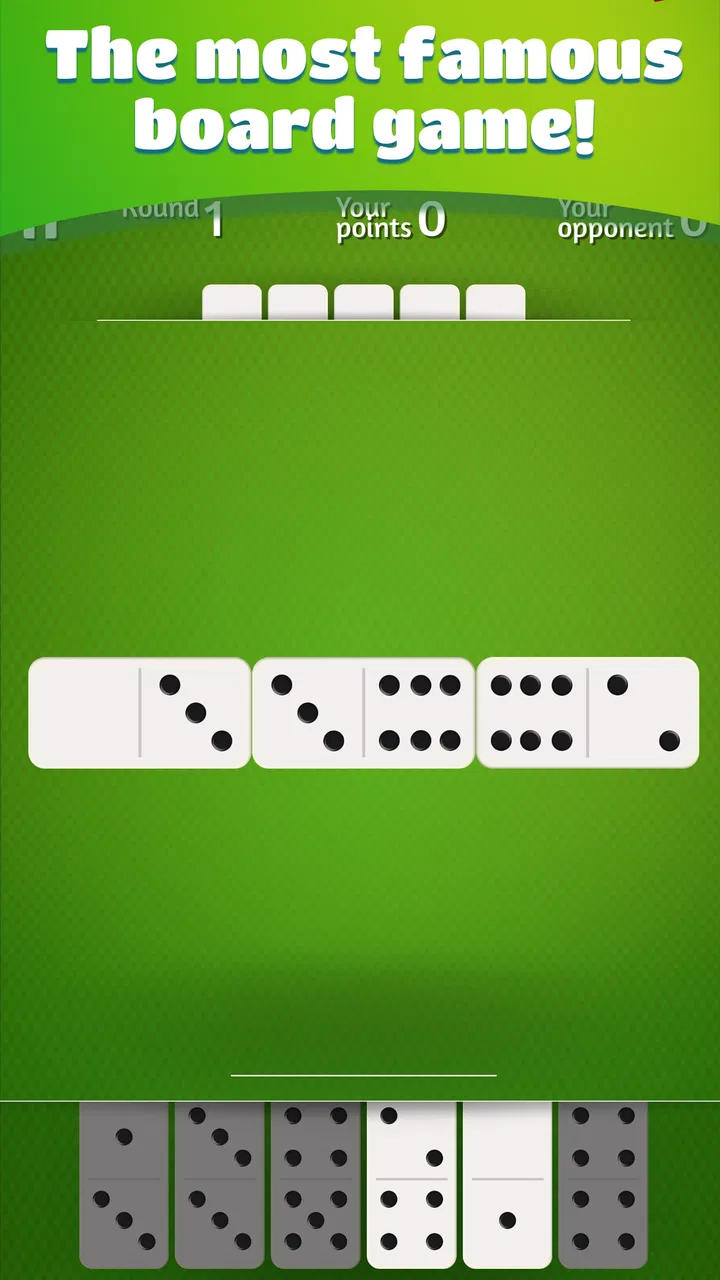
The early goal is refreshingly direct: play your tiles intelligently and finish the round in the best possible position. There is no need to learn a fictional world, manage a collection, or understand several currencies before the game becomes enjoyable. The familiar domino structure does most of the teaching. After a few turns, I was already thinking about which numbers had appeared, which ends were likely to remain useful, and whether holding a flexible tile was safer than playing it immediately.
You May Also Like

 AccuWeather: Weather Radar
AccuWeather Review: A Quick, Clear Forecast for Everyday Decisions
For everyday plans, the best forecast is the one you can understand quickly. AccuWeather makes rain timing, radar, and local conditions easy to act on, with a few trade-offs.

 Hill Climb Racing
Why Hill Climb Racing Still Turns Crashes Into One More Run
A tiny car, a bumpy hill and one more upgrade: Hill Climb Racing keeps resurfacing because its simple chaos makes every near-miss feel personal.

 AliExpress - Shopping App
AliExpress Makes Global Shopping Feel Personal, but Shoppers Bear the Risk
AliExpress turns a global marketplace into a pocket-sized discovery engine. Its reach is useful, its shopping loop compelling, and its trade-offs easy to miss.

 Lords Mobile: Kingdom Wars
Lords Mobile Is a Kingdom-Building Routine, Not a Quick Match
A case-by-case verdict on the building, battles, device demands, and social commitments that make Lords Mobile rewarding for some players and exhausting for others.

 PDF Scanner app - TapScanner
TapScanner Makes Paperwork Easier to Capture, Check, and Share
TapScanner makes scanning with a phone feel less like a rescue operation and more like a dependable step in getting work done. Its capture tools are useful, though not flawless.

 Block Blast!
 Shows How Much a Puzzle Game Can Leave Out
A quiet grid game shows why puzzle players increasingly value instant clarity, repeatable skill and low-pressure play—and where the genre still needs to catch up.
More From Our News Desk
View All News


That simplicity is especially useful for casual players. I could hand the phone to someone who knows traditional dominoes and expect them to understand the basic flow quickly. At the same time, a complete beginner has a manageable path into the game because every move is connected to the visible board. The goal is not hidden behind menus; it is right in front of you.
My advice for a first session is to resist playing the first legal tile automatically. Instead, look at the two open ends and ask which one gives you more options on the next turn. A double or a tile with a number that appears frequently in your hand can be valuable, but using it too early may remove your best response later. This small habit makes the game feel more deliberate without adding complexity.
The opening matches also reveal an important trade-off. Dominoes is easy to enter, but that does not mean every round feels equally deep. When the available plays are limited, the result can depend heavily on the tiles you receive. When several options are open, however, the choice of timing matters much more. I enjoyed it most when the board created several plausible moves and I had to decide whether to protect my own hand or restrict the other side.
What progress feels like during ordinary play
Progress here is mainly about improving my decisions, not building a character or unlocking a large set of abilities. I noticed a useful change after several sessions: I stopped judging a move only by whether it was legal and started considering what it revealed. Playing a number can tell the opponent what I am holding, while refusing to open a certain end can preserve uncertainty. That kind of progress is subtle, but it is the main reason a simple board game can remain satisfying.
The game’s broad popularity supports that pick-up-and-play role. It has passed 100 million installs and holds a 4.7 average from around 2.1 million ratings, which makes it easy to understand why it appears in many casual game libraries. Those figures do not guarantee that every player will enjoy the same style, but they fit my impression of a polished, accessible domino option rather than a niche simulation.
I also like that the board itself acts as a progress signal. A round may begin with no obvious plan, then gradually reveal which numbers are becoming scarce and which player is controlling the useful ends. Instead of waiting for a reward screen to tell me that I am improving, I can feel the difference in how carefully I read the position.
One practical technique is to track numbers mentally without trying to memorize the entire set. Focus first on the number that appears at both open ends or on a number you hold several times. If that number has already been played repeatedly, keeping one of its remaining connections may be less useful than clearing it. This is not a special feature; it is a way to get more value from the information the board already shows.
Difficulty, pacing, and the point where repetition appears
The difficulty curve feels approachable rather than dramatic. The rules do not suddenly become complicated, so the challenge comes from recognizing better patterns and making fewer careless moves. That is a good fit for a board game app meant to be played in spare moments. I could stop after a round without feeling that I had abandoned a long campaign, then return later without needing to relearn a control scheme.
There is a downside to this gentle structure. Players who need a strong sense of escalation may find the experience repetitive. A match can be satisfying because of the decisions inside it, but the basic activity remains the same: place tiles, manage the open ends, and try to close out the round effectively. If you are looking for a board game with a story, elaborate unlock tree, or constantly changing rules, this will probably feel too restrained.
The pacing works best when I treat each round as a small problem rather than expecting every game to deliver a major event. A quick session can be useful during a commute or while waiting for an appointment, although I would avoid playing when I need to concentrate on something else. The turns are simple, but the best choices require enough attention to remember what has already been exposed.
Another useful adjustment is to set a personal stopping point before starting. Because a round is short and the next one is always tempting, it is easy to continue after a frustrating loss. I found that playing a few focused rounds was more satisfying than chasing an immediate win. The game benefits from being treated as a calm mental break, not as an endless test of patience.
Goals and unlocks: what keeps me returning
The retention appeal is strongest for people who enjoy repeating a familiar ruleset and gradually becoming sharper. The game does not need a large progression structure to make a close round meaningful. My motivation came from trying to play more cleanly: avoid wasting flexible tiles, recognize when an opponent is being forced toward a particular number, and finish with fewer unhelpful pieces left in hand.
That also means expectations matter. I would not install this specifically for a deep unlock journey or a long-term collection project. The available experience is better understood as repeatable board play than as a progression-heavy game. If your idea of progress is unlocking new abilities every few minutes, the retention loop may feel light. If you enjoy mastering a compact ruleset, the lack of clutter is a strength.
There can still be pressure to keep playing after a loss, particularly when the defeat feels close enough to reverse. I think that pressure comes from the game’s short rounds and immediate rematch appeal rather than from a complicated reward system. The positive side is that returning is effortless. The negative side is that a player who dislikes repeating similar matches may run out of reasons to continue sooner than expected.
For families, the Everyone rating makes the game an approachable choice for mixed-age play, provided everyone is comfortable with the particular rules and pace of the match. I would also recommend it to someone who wants to introduce a child or a casual player to basic planning. The board is easier to understand than many digital strategy games, and the consequences of a move are visible enough to discuss together.
On the other hand, I would skip it if my priority were a rich competitive ladder, a social party atmosphere, or a campaign with a strong narrative. A traditional physical domino set may be better when several people are already sitting together, because it creates conversation and shared table presence that a phone cannot reproduce. This app is more convenient for solo downtime and quick practice than for replacing a full group gathering.
Small decisions that improve the experience
My first concrete tip is to value flexibility early in a round. A tile that can connect to more than one useful number gives me insurance when the board changes. I do not always save it until the end, but I avoid spending it simply because it is legal. The strongest move is often the one that leaves two reasonable options for the next turn.
Second, I pay attention to forced openings. If the opponent repeatedly chooses one side of the layout, that may indicate which numbers are comfortable for them or which alternatives they lack. I cannot know their hand with certainty, but I can avoid handing them the same convenient number whenever another safe option exists. This turns a basic placement game into a modest exercise in deduction.
Third, I think about the end of the round earlier than feels necessary. Holding several awkward tiles while clearing easy ones can create a poor final position, even if the opening looked good. If one number is becoming difficult to connect, I try to use that tile while the board still offers a suitable end. This is particularly important when the available moves begin to narrow.
A fourth tip is to separate a bad draw from a bad decision. Sometimes the tiles simply leave few choices. Reviewing the turn afterward helps me identify whether I missed a safer connection or was genuinely boxed in. That mindset keeps the game from becoming needlessly frustrating and makes each session more useful as practice.
Free access, purchases, and everyday usability
The game is free to download and play, with optional in-app purchases ranging from $0.99 to $64.99 per item. I would approach those purchases carefully. For a straightforward domino game, the core question is whether the basic play already satisfies you. In my view, it does for someone who wants quick matches, so spending should be a personal convenience choice rather than something required to understand the rules.
The current version is 2.1.5, and the app comes from Loop Games, a developer associated here with a focused approach to casual play. The low minimum operating-system requirement also makes it relevant for people using older compatible Android phones. That can be useful if you want a lightweight board option without moving to a newer device simply for this game.
There are a few practical limitations to keep in mind. A phone screen is comfortable for one player, but it is not as natural as physical tiles when several people want to inspect the board together. Also, the straightforward design may feel sparse to players who expect extensive customization or a strong sense of achievement between matches. These are not deal-breakers, but they define the audience clearly.
For an everyday scenario, I can imagine opening it during a ten-minute wait, playing one or two rounds, and closing it without losing track of a larger objective. I can also see it working as a quiet evening game when I want to think but do not want the intensity of a card battler or a competitive action title. The short-session format is its most practical advantage.
How it compares with physical dominoes and other board games
Compared with physical dominoes, the app wins on convenience. There is no setup, no need to find a complete set of tiles, and no table space required. It is easier to practice alone and easier to carry. Physical play still wins for atmosphere, conversation, and the tactile pleasure of mixing and placing real pieces.
Compared with larger digital board games, this one is less intimidating. There are fewer rules to remember and less time spent managing menus, decks, resources, or a campaign map. That makes it a better recommendation for someone who wants the essence of dominoes rather than a board game that uses domino-shaped pieces as part of a much bigger system.
Its weakness in that comparison is variety. A larger board-game app may offer more scenarios, changing objectives, or strategic layers that create fresh problems from one session to the next. Here, the long-term appeal depends more on enjoying the underlying domino decisions. I would choose this app for clarity and immediacy, not for a broad catalogue of modes.
Who should install it and who should pass
I recommend it to casual players, traditional domino fans, families looking for an approachable board game, and anyone who enjoys short rounds with light but meaningful planning. It is also a sensible choice for older Android devices that meet the minimum requirement, especially when the goal is a simple game that can be opened and understood quickly.
I would be more cautious about recommending it to players who need constant novelty, a visible unlock path, or a demanding competitive structure. The game’s charm comes from refining decisions inside a stable ruleset. If that sounds repetitive rather than relaxing, a deeper strategy game or a more social physical alternative will probably suit you better.
After spending time with it, my progression verdict is positive but specific: the game sustains play through improving judgment, not through an elaborate ladder of goals and rewards. That is enough for me when I want a dependable domino session, but it will not satisfy every kind of completionist. Its best quality is the clean connection between a familiar rule and a surprisingly thoughtful turn.
In the end, Dominoes is a focused board game rather than a feature-packed mobile production. Loop Games keeps the central activity easy to approach, while the decisions become more rewarding once I start watching patterns, preserving options, and planning for the final tiles. I would install it for quick, repeatable play and recommend it to a friend who wants a quiet strategy break. I would not present it as a substitute for every board-game experience, but within its narrow purpose, it does that purpose well.
FAQs for Dominoes
01What features does the Dominoes app offer?
The Dominoes app provides various game modes including Classic, All Fives, and Block. It features both single-player and multiplayer options, allowing you to play against AI or friends. The app includes customizable boards and tiles, as well as detailed statistics to track your progress and performance.
02Is the Dominoes app free to download and play?
Yes, the Dominoes app is free to download and play. However, it may include in-app purchases and ads. These purchases can help enhance the gaming experience by unlocking additional features, such as ad-free play or custom tile sets. Always check your app store for specific pricing details.
03Can I play with friends using the Dominoes app?
Absolutely! The Dominoes app supports multiplayer functionality, allowing you to invite and challenge friends. You can connect with friends via social media or play with random opponents online. This feature enhances the social aspect of the game, making it more enjoyable and competitive.
04What are the minimum device requirements for the Dominoes app?
The Dominoes app requires a device running Android version 5.0 or higher, or iOS 10.0 and above. It is optimized for both smartphones and tablets, ensuring smooth gameplay across different devices. For the best experience, ensure your device is updated to the latest operating system version.
05Are there any privacy concerns with the Dominoes app?
The Dominoes app requires certain permissions for optimal functionality, such as access to your internet connection for multiplayer games. The app may also collect data for analytics and ad targeting. It’s advisable to review the app’s privacy policy to understand how your information is used and protected.
Pros
- Simple and intuitive interface.
- Variety of game modes available.
- Smooth and responsive gameplay.
- Customizable settings for players.
- Offline play supported.
Cons
- Contains in-app advertisements.
- Limited social features.
- Requires constant updates.
- Graphics are quite basic.
- No tutorial for beginners.

Dominoes
Gallery